The Science of Physics Engines: Making Non-Lethal Combat Feel Real
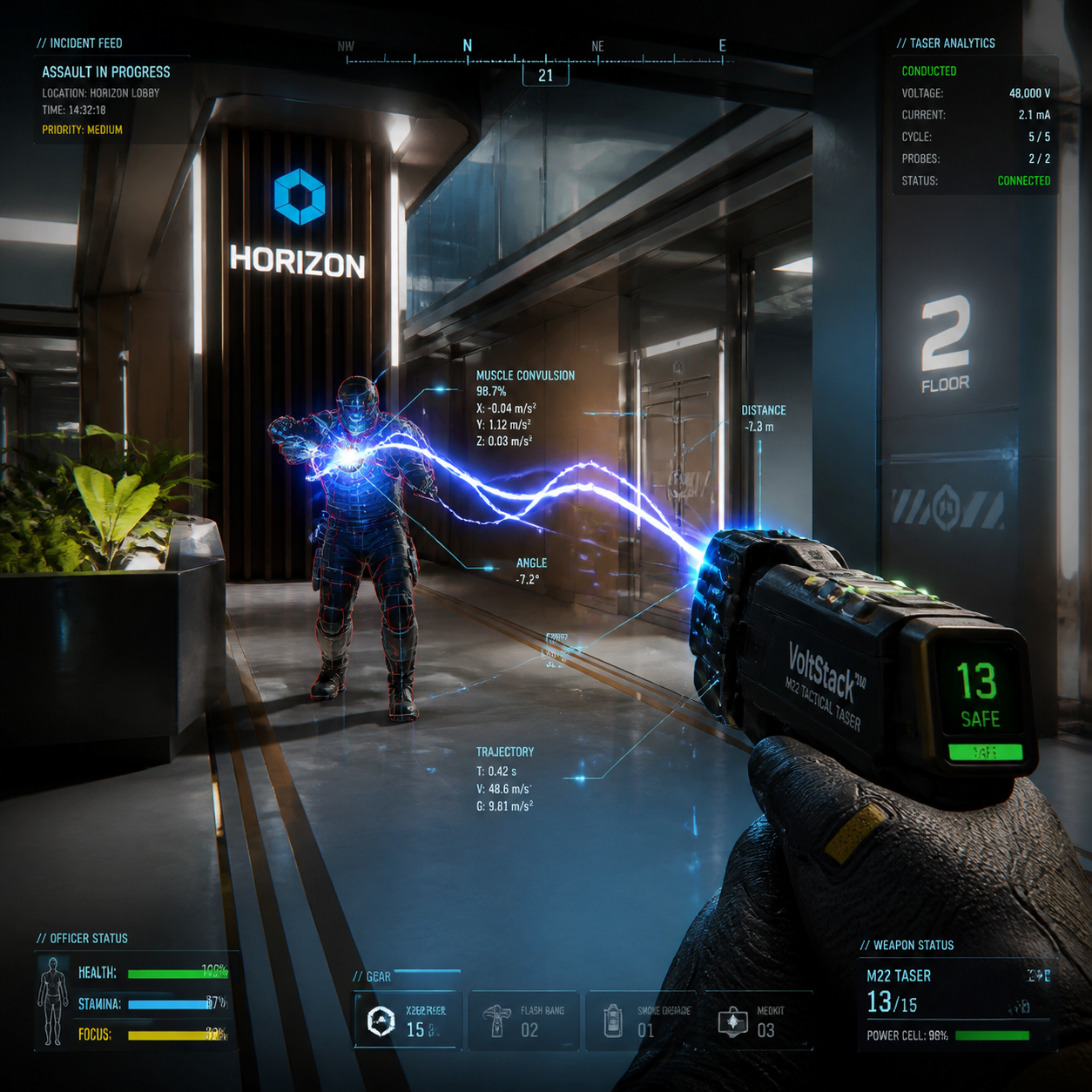
There's a moment every non-lethal FPS player knows: you fire a rubber bullet, the enemy stumbles, and for a split second you wonder — did that actually work? That flicker of doubt is a design problem. Making a stun feel as convincing as a kill is one of the most underappreciated engineering challenges in game development, and the physics engine sits at the center of solving it.
Why Non-Lethal Weapons Are Harder to Simulate Than Lethal Ones
Non-lethal weapons are harder to simulate because they demand a sustained, convincing physical response without the dramatic finality that a kill provides. A lethal hit ends the interaction — the enemy falls, the problem is solved. A stun has to communicate temporary incapacitation while keeping the enemy's body believably active, which requires far more nuanced physics work.
With lethal combat, death is the ultimate feedback. The body drops, goes limp, and the player's brain accepts it as resolved. Non-lethal hits exist in a messier middle ground: the target has to look genuinely affected, struggle to stay upright, and eventually recover — all while the player needs to feel like their shot mattered. That's a much harder emotional and mechanical target to hit.
Developers working in the non-lethal FPS space often describe this as the "impact gap" — the perceptual difference between what a rubber bullet or taser actually does to a body and what a player expects to see. Bridging that gap requires physics systems that punch above their weight, compensating for the absence of blood or death animations with precision, layered feedback, and smart simulation.
Force Vectors and Impulse Physics — The Math Behind a Stun
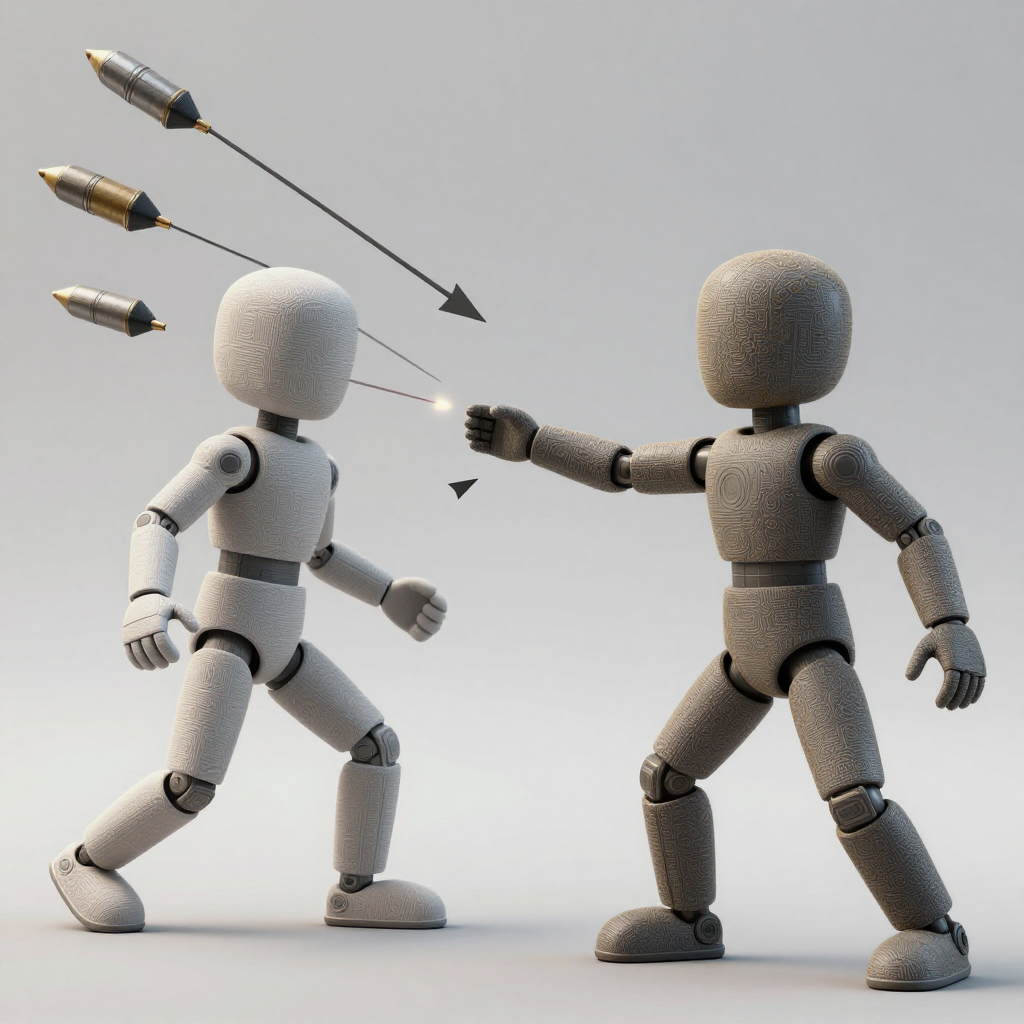
When a non-lethal projectile connects with an enemy, the physics engine converts that hit into a force vector — a directional push applied to the target's body at the point of contact. The direction, magnitude, and duration of that impulse determine whether the hit feels like a shove, a stagger, or a full knockdown.
Impulse force is calculated using the projectile's simulated mass, velocity, and the surface it strikes. A beanbag round hitting a torso generates a different impulse than a taser dart hitting a shoulder. Developers tune these values carefully — too little force and the enemy barely reacts; too much and the hit looks cartoonish, undermining the realism the genre depends on.
Kinetic energy simulation adds another layer. Rubber bullets and similar projectiles lose energy over distance, so a shot at close range should produce a noticeably stronger stagger than one fired from across the room. Getting this decay curve right is what separates a physics system that feels alive from one that feels scripted. The player may not consciously notice it, but their body does — and that's exactly the point.
Ragdoll Systems and the Art of the Non-Lethal Takedown
Ragdoll physics for non-lethal incapacitation works differently from death animations — the system has to simulate a body losing voluntary control while still retaining some muscle resistance. A fully limp ragdoll reads as dead. The goal is something in between: a controlled collapse that looks involuntary but not fatal.
Most modern physics engines handle this through partial ragdoll blending. When a stun registers, the system gradually shifts control from the character's animation rig to the physics simulation, typically starting at the point of impact and spreading outward. A leg shot might ragdoll the lower body while the upper body still tries to stay upright — which is exactly how a real person would react to a rubber bullet hitting their thigh.
Recovery animations are equally important. After the ragdoll phase, the character needs to transition back into an active state — getting up, shaking off the stun, resuming their behavior. This transition has to feel earned and physically plausible. A poorly handled recovery animation can undo all the work the ragdoll system did, making the whole sequence look mechanical. The best implementations blend the physics exit into a procedurally matched get-up animation, so the character rises from whatever position the physics left them in.
Collision Detection and Hit Registration in Non-Lethal FPS Games
Precise collision detection — tracking exactly where on the body a projectile lands — directly shapes how stun mechanics play out in a non-lethal FPS. A hit to the legs should produce a different result than a hit to the chest or head, both in terms of knockback direction and stun duration.
This zone-based hit registration isn't just about realism; it's a core gameplay mechanic. Targeting the legs slows an enemy and limits their mobility. A torso hit delivers maximum impulse force and the strongest stagger. Head hits in non-lethal games often produce brief disorientation effects rather than instant incapacitation, preserving the challenge while still rewarding accuracy. These distinctions give skilled players meaningful choices about where to aim, which is what separates a physics-driven non-lethal system from a simple "shoot and stun" loop.
Hitbox granularity is where a lot of the engineering effort goes. Coarse collision detection — treating the whole body as one zone — flattens the gameplay and makes the physics feel disconnected from the result. The finer the hitbox model, the more the physics simulation can respond in ways that feel genuinely causal: you shot the knee, so the enemy dropped to one knee. That chain of logic is what builds player trust in the system.
Closing the Feedback Loop — Sound, Rumble, and Visual Cues
Audio design, haptic feedback, and visual effects are what make a physics simulation land emotionally. The physics engine handles the mechanics; the feedback loop is what the player actually feels. Without it, even a technically accurate simulation can feel hollow.
Sound does heavy lifting here. The crack of a rubber bullet, the electrical buzz of a taser discharge, the grunt of an enemy absorbing impact — these audio cues arrive before the visual response fully registers, priming the player's brain to interpret the hit as impactful. Developers often layer multiple sounds: the weapon discharge, the projectile in flight, the contact impact, and a secondary environmental response (something falling, a surface cracking). Each layer adds perceived weight.
Haptic feedback — controller rumble patterns tuned to match specific weapon types — reinforces the hit at a physical level. A short, sharp pulse for a rubber bullet. A sustained, irregular vibration for a taser. These patterns are choreographed alongside the physics response so the player's hands feel what their eyes see. Research into sensory reinforcement in gaming consistently shows that matched audio-haptic feedback increases perceived impact by a significant margin, even when the visual output stays the same.
Screen effects — brief desaturation, edge blur, or a subtle camera shake — round out the package. Used sparingly, they amplify the sense that something real just happened without tipping into the exaggerated territory that breaks immersion.
Procedural Animation — Bridging Physics and Believability
Procedural animation is the layer that stops physics simulations from looking broken. Raw ragdoll and impulse physics, left unguided, can produce absurd results — limbs bending at impossible angles, bodies sliding across floors, enemies flopping in ways that undermine the entire scene. Procedural systems constrain and guide the physics output toward something that reads as believable.
The technique works by blending physics-driven movement with pre-authored animation data in real time. When an enemy takes a stun hit, procedural animation ensures their arms reach out to brace a fall, their head turns away from the impact, and their legs respond in a way consistent with how a human body would actually react. The physics engine provides the raw force; the procedural layer shapes the response into something that looks intentional.
This is especially important for incapacitation sequences that last more than a second or two. A fully physics-driven body will settle into whatever position gravity and friction dictate, which is often awkward. Procedural animation can gently guide the settling process, ensuring the enemy ends up in a position that looks plausible — and that the player can act on, whether that means zip-tying, repositioning, or moving past.
The Future of Non-Lethal Physics — Where the Genre Is Heading
The next generation of non-lethal FPS physics is moving toward AI-driven body reactions and soft-body simulation — systems that respond not just to where a hit lands, but to the target's current state, posture, and environment.
Soft-body simulation, currently too expensive for real-time use in most games, would allow clothing and flesh to deform realistically on impact, adding a layer of visual authenticity that current rigid-body systems can't match. As GPU performance continues to climb, this is moving from theoretical to practical faster than most developers expected.
AI-driven reaction systems are already appearing in early forms. Rather than pulling from a fixed library of stun animations, these systems generate context-appropriate responses based on the character's current animation state, the incoming force vector, and nearby geometry. An enemy hit while crouching behind cover reacts differently than one standing in the open — and the physics engine knows the difference.
For the non-lethal FPS genre specifically, these advances matter more than in almost any other context. The genre's entire premise rests on making restraint feel as rewarding as destruction. Better physics is what gets it there.
Frequently Asked Questions
Why do non-lethal weapons often feel less satisfying than lethal ones in FPS games?
The core issue is feedback finality. Lethal hits end the interaction with a clear, dramatic result. Non-lethal hits produce a temporary, ongoing response that requires the physics and feedback systems to work harder to communicate impact. When those systems are underdeveloped, the hit feels weak — not because of the weapon, but because the game hasn't given the player enough sensory confirmation that something real happened.
What is ragdoll physics and how does it apply to stun or incapacitation?
Ragdoll physics is a simulation technique where a character's body is controlled by physics forces rather than pre-set animations. For stuns, developers use partial ragdoll blending — shifting some body parts to physics control while others remain animation-driven — to simulate the involuntary loss of muscle control that real incapacitation produces, without making the character look dead.
How do developers balance realism and fun when simulating non-lethal force?
The balance usually comes down to tuning impulse values and stun durations to feel plausible rather than physically exact. Real-world non-lethal weapons are often less dramatic than players expect, so developers amplify the physics response slightly — stronger stagger, more pronounced ragdoll blend — while keeping the visual language grounded. The goal is believability, not documentary accuracy.
Does hit location matter in non-lethal FPS games?
Yes, and in well-designed non-lethal games it matters more than in lethal ones. Zone-based collision detection means a leg hit produces different knockback, stun duration, and movement penalties than a torso or head hit. This gives skilled players meaningful tactical decisions about where to aim, turning the physics system into a gameplay layer rather than just a visual effect.
What role does audio play in making non-lethal combat feel impactful?
Audio is often the most immediate feedback a player receives after firing. Because non-lethal hits lack the visual drama of lethal ones, sound design compensates by layering multiple impact cues — discharge, travel, contact, and environmental response — that prime the brain to register the hit as significant. A well-designed impact sound can make a rubber bullet feel genuinely weighty even before the ragdoll animation fully plays out.