The Physics Behind Realistic Non-Lethal Weapons in FPS Games
Introduction to Non-Lethal Weapons in FPS
Non-lethal weapons are tools designed to incapacitate or hinder players without causing permanent harm or death, increasingly featured in FPS games to promote player wellbeing and innovative gameplay. These weapons create strategic depth and fresher experiences by focusing on control and disruption rather than elimination.
Unlike traditional lethal firearms, non-lethal options such as stun guns, rubber bullets, and impact grenades prioritize disabling over destruction. Their rising inclusion reflects both player demand for less violent alternatives and developers’ interest in enriching game mechanics.
Integrating non-lethal weapons effectively demands a solid understanding of physics, as realistic behaviors improve immersion and fairness. We'll explore how physics principles and game engines bring these effects to life while maintaining the competitive appeal of FPS titles.
Core Physics Concepts Driving Realistic Weapon Behavior
Projectile trajectory, impact force, and collision response are fundamental physics concepts powering realistic non-lethal weapon behavior in FPS games. These principles ensure game actions feel authentic and responsive to players.
Projectile dynamics govern how non-lethal rounds or objects move through space, factoring in velocity, mass, and gravity to simulate real-world arc and drop. Calculating trajectories allows for believable bullet paths, essential for fair and skill-based gameplay.
Impact force modeling determines how a striking projectile transfers energy to a target, crucial for triggering effects like stuns or knockbacks without causing lethal damage. This involves calculating momentum and force vectors based on mass and speed at collision.
Lastly, collision response handles the physical reaction when projectiles contact surfaces or characters. Realistic rebounds, deflections, or stopping behaviors come from physics calculations, enhancing player perception of a credible world.
Developers commonly apply Newtonian mechanics, conservation of momentum, and material hardness coefficients to fine-tune non-lethal weapon effects, balancing realism with game-centered adjustments.
Leveraging Physics Engines for Non-Lethal Weapon Mechanics
Physics engines like Havok and Nvidia PhysX are essential tools that enable complex simulation of projectile motion and impact for non-lethal weapons in FPS development. These engines automate many calculations necessary for believable physics interactions in real time.
Physics engines support detailed interactions including gravity effects on rubber bullets, collision detection with player hitboxes, and accurate application of forces for stun or pushback mechanics. They also facilitate ragdoll physics integration, helping character models react naturally when hit.
By abstracting raw physics math, these engines allow developers to focus on gameplay balance and visual polish rather than building systems from scratch. Custom shaders and particle effects further amplify impact feedback when coupled with physics-based projectile behavior.
Advanced engines support layer-based collision filtering, letting non-lethal weapons interact differently with environments or specific body parts—a tactical nuance enriching player strategy. This level of control ensures non-lethal tools feel satisfying and fair.
Balancing Gameplay: Impact vs. Player Experience
Balancing realism with player experience means ensuring non-lethal weapons deliver impactful feedback without frustrating gameplay or breaking competitive fairness. Physics-driven mechanics must not only feel authentic but also support strategic depth.
For instance, accurately modeled impact forces determine how far a player is knocked back or stunned, but overdoing these effects can disrupt flow and frustrate players. Conversely, weak physics responses risk making non-lethal weapons feel ineffective or gimmicky.
Game balance considerations include adjusting projectile speed, stun duration, and recovery times based on playtesting data. Developers must find a middle ground where physics enhance immersion yet keep matches engaging and unpredictable.
Designers also weigh trade-offs: stronger impact effects may reduce weapon firing rate or accuracy to maintain fairness. Integrating physics means more nuanced balancing but rewards players with satisfying tactile feedback that deepens gameplay.
Animation and Feedback: Enhancing Immersion through Physics
Player immersion rises dramatically when non-lethal impacts trigger visible, physics-driven animation responses like ragdolls and stun sequences. These feedback systems convey the weapon’s effect clearly and emotionally connect players to the action.
Ragdoll physics simulate the limp, uncontrolled movement of characters after impact, reflecting force direction and magnitude. This naturally visualizes impact force calculations, making each hit feel unique and believable.
In addition, subtle animations—such as stagger, flinch, or slow-motion recovery—are layered on top of ragdolls to portray stun mechanics convincingly. Synchronizing these with sound and particle effects creates a holistic sensory experience.
Such physics-informed visual feedback not only improves realism but also helps players intuitively understand non-lethal weapon mechanics, promoting deeper engagement and strategic thinking during gameplay.
Development Best Practices for Physics-Based Non-Lethal Weapons
Creating robust non-lethal weapon systems using physics involves iterative testing, modular design, and cross-disciplinary collaboration within game development workflows. Developers should approach this with a blend of engineering precision and player-centered design.
- Start with clear physics requirements: Define desired projectile types, impact effects, and player states early to guide engine parameter tuning.
- Use modular components: Separate physics calculations, animation triggers, and gameplay logic for easier iteration and bug isolation.
- Prioritize performance optimization: Physics simulations can be processor-intensive, so optimizing collision checks and reducing calculations for distant interactions is crucial.
- Engage player feedback early: Regular playtests help calibrate impact forces and stun durations to keep weapons fun and fair.
- Leverage engine debugging tools: Use physics visualization and profiling features in Havok or PhysX to identify unrealistic behaviors and fine-tune accordingly.
This structured, data-driven approach leads to more polished, immersive non-lethal weapon experiences while respecting technical constraints and player expectations.
Future Trends: Evolving Physics and Player-Centered Design
The future of physics-based non-lethal weapons in FPS games lies in increasingly adaptive, player-centered designs that push realism and wellbeing forward simultaneously. Enhanced physics simulations promise more nuanced projectile behaviors, surface interactions, and effect layering.
Emerging trends include integrating machine learning to model complex impact scenarios, improving procedural ragdoll responses, and introducing physics-driven environmental effects that non-lethal weapons can trigger for tactical variety.
Moreover, developers are exploring wellness-focused game modes where realistic non-lethal combat reduces player stress and promotes positive engagement without sacrificing challenge or excitement.
Such innovations reflect a broader shift toward thoughtful, physics-informed game design that respects balance, immersion, and player health, marking a promising path ahead for FPS development.
Frequently Asked Questions
What are examples of non-lethal weapons used in popular FPS games?
Common non-lethal weapons include stun grenades, rubber bullet guns, tasers, and flashbangs featured in games like "Rainbow Six Siege," "Valorant," and "Counter-Strike" custom mods. These tools add strategic crowd control and disruption options.
How do physics engines calculate projectile trajectories?
Physics engines use equations of motion factoring initial velocity, angle, gravity acceleration, and air resistance to simulate projectile paths frame-by-frame. This allows for realistic arcs and dropoffs consistent with real-world physics.
Can non-lethal weapons affect player strategy in competitive FPS?
Absolutely. Non-lethal tools shift gameplay from pure elimination to control and positioning, forcing teams to adapt tactics around stuns, displacements, and area denial, which can change the flow and outcome of matches.
How does impact force relate to player animation and ragdolls?
Impact force magnitude and direction drive ragdoll animations by determining how far and in which direction the player model reacts post-hit, enhancing realism and visual clarity of hits in the game world.
What challenges exist when integrating realistic physics with gameplay balance?
Challenges include managing computational costs, preventing disruptions to gameplay flow, avoiding overly punishing effects, and ensuring predictability so that skill-based outcomes remain paramount alongside physics realism.
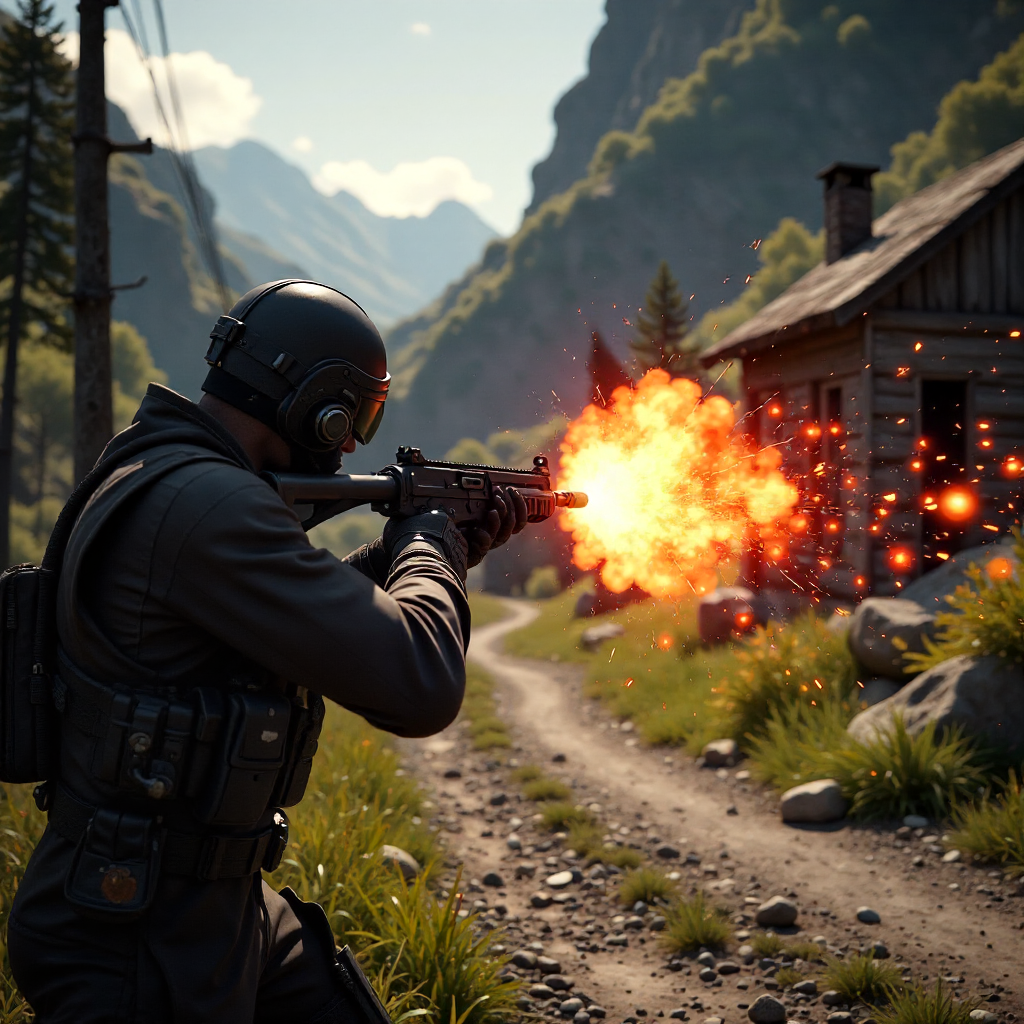
By weaving authentic physics with player-focused design, FPS games can redefine non-lethal weaponry as a rich, strategic, and immersive element that enhances both player wellbeing and competitive excitement.