The Importance of Narrative in Non-Violent FPS Games
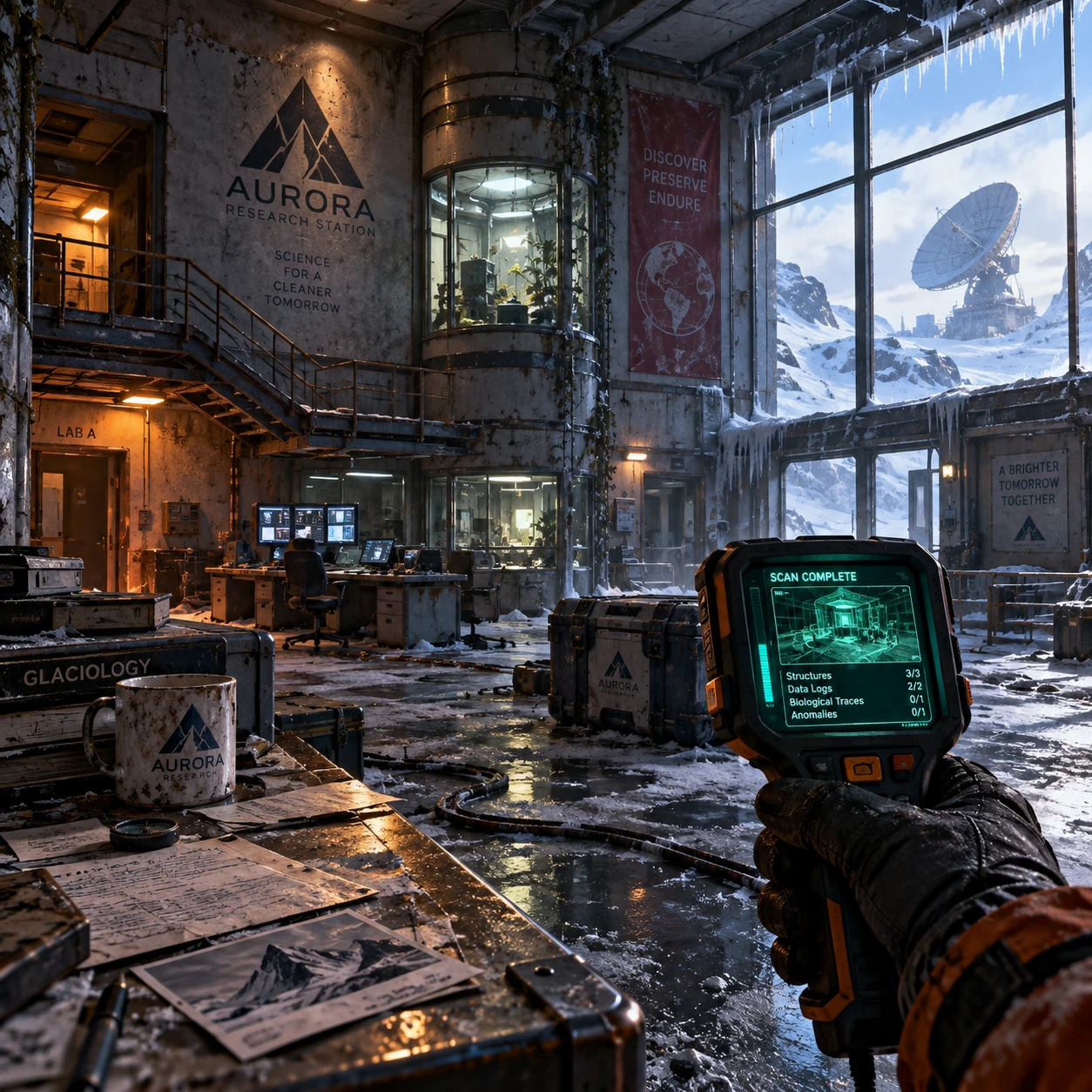
A first-person game does not need combat to make every step matter. In non-violent FPS games, narrative design can turn looking, listening, navigating, and helping into purposeful play. The story emerges through the relationship between the player and the world: what a space reveals, what an objective asks, and what changes because of the player’s actions.
For game developers, this is a design opportunity as much as a writing challenge. When worldbuilding, level design, objectives, and sensory feedback support the same idea, the player can feel part of the story rather than an audience waiting for the next scene.
What “Non-Violent FPS” Means in Game Design
A non-violent FPS is a first-person game built around play that avoids or de-emphasizes harming characters. The first-person perspective remains central; combat does not have to define the genre.
Players may explore, investigate, solve environmental puzzles, photograph wildlife, repair systems, or communicate with characters. A tool held in view might be a scanner or flashlight rather than a weapon. What matters is how the player perceives and interacts with the world from a first-person viewpoint.
This distinction helps teams make deliberate choices instead of treating violence as an assumed FPS convention. A camera, map, or sound detector can give players a clear way to act, but each tool also shapes the tone. A scanner encourages close observation; a loud device may make the world feel reactive or fragile.
Design test: identify the player’s core verb, such as observe, guide, restore, or uncover. Then make sure the controls, interface, level layout, and feedback all support that verb. The trade-off is that removing combat also removes a familiar source of urgency, so the game needs other reasons to act and pay attention.
Why Narrative Matters Beyond Combat
Narrative gives exploration, observation, and problem-solving a reason to matter. It connects what the player does moment to moment with a larger question, relationship, or change in the game world.
Without that connection, exploration can feel like wandering through attractive scenery. With it, a small action carries context: restoring power might let a stranded community communicate, while documenting a rare animal might help protect its habitat. The mechanic remains simple, but the story gives it consequence.
Plot is only one part of narrative. In a non-violent FPS, narrative design also includes the order in which information appears, what the player must infer, and how the experience responds to their actions. A story told through exploration can be more persuasive than a long explanation because the player discovers evidence firsthand.
- Purpose: tell players why a task matters within the world.
- Curiosity: create questions that encourage players to investigate.
- Emotional stakes: show what could improve, disappear, or remain unresolved.
There is a balance to manage. If every interaction exists only to deliver plot, the world may feel like a sequence of lectures. If narrative signals are too faint, players may miss why their work matters. Tie story information to actions the player already wants to take.
Building Stories Through the Environment
Environmental storytelling uses spaces and objects to reveal history, relationships, and change without relying on a character to explain everything. In a first-person game, the player can encounter those clues at their own pace.
Worldbuilding becomes tangible through details: a trail of muddy footprints, a repaired chair beside an unfinished meal, or a faded route map marked with new detours. These objects are most effective when they suggest a readable connection. A locked storage room, for example, may raise a question; a fresh set of tools outside it may suggest someone still works there.
Level design controls how players encounter this information. Sightlines can draw attention to a landmark, while a narrow passage can make a discovery feel intimate. Optional details reward curiosity, but essential story information should not depend on noticing a tiny object in a crowded room.

One practical method is to make a clue serve two purposes. A power cable can guide the player toward a generator and hint that someone recently tried to restore the facility. A weather station can function as a puzzle location while showing how the environment has changed. This keeps details integrated with play rather than dressing added after the level is complete.
Making the Player Part of the Narrative
Player agency in a non-violent FPS comes from giving players meaningful ways to observe, choose, and affect the world. Choices need not create dramatically different endings; they can shape what the player understands or how a place responds.
Movement itself can carry meaning. Pausing to inspect a personal object, taking a longer route to avoid disturbing wildlife, or returning to a familiar room after a repair can make the player’s behavior part of the story. These moments work when the game acknowledges them through changed dialogue, new environmental details, or clear feedback.
For choice design, separate consequence from scale. A decision can matter locally without branching the entire narrative. The player might choose which community message to deliver first, or whether to spend limited time documenting a site before restoring its equipment. Each option should communicate what it prioritizes and what it delays.
Ambiguity can also support agency, but it has limits. If players cannot tell what an interaction does, they may read uncertainty as a broken system rather than a moral or narrative question. Use clear action feedback, then leave room for interpretation in the meaning of the outcome.
Connecting Level Design, Objectives, and Story
Level design, objectives, and story work together when each goal fits the place where it happens and the larger purpose of the player’s journey. Coherent progression helps the player understand both what to do next and why it belongs in the story.
Start with a simple chain: establish a need, let the player discover a practical obstacle, and make progress reveal new context. For example, a player may be asked to reconnect a weather station. Reaching it requires reading the terrain, finding a safe route, and identifying a damaged component. The repair then reveals a transmission or data pattern that changes how the player understands the region.
Objectives should describe actions in terms the player can act on. “Find the eastern relay and restore its signal” is clearer than “learn what happened.” The second phrase may express a narrative goal, but it does not tell players how to engage with the level. Pair a concrete task with story context so both remain legible.
- Give each level a distinct purpose, mood, or discovery.
- Use landmarks and environmental cues to orient players without constant waypoint prompts.
- Let completed objectives visibly change the space or unlock a new understanding.
Too much guidance can make exploration feel like following a checklist; too little can stall progression. Test levels with players who do not know the intended route. Notice where they become curious and where they simply become lost. That distinction is useful: curiosity is a narrative opening, while confusion often signals a communication problem.
Using Audio and Visual Cues to Sustain Immersion
Audio and visual cues sustain immersion by communicating the state and mood of the world through what the player sees and hears. They can reveal story information without stopping play for lengthy exposition.
Sound can guide attention: a distant pump may point toward a service area, while a sudden drop in ambient noise can signal that the player has entered a protected or unusual space. Visual details do similar work. Changing light, moving foliage, or a status display that shifts after a repair can show that an action had an effect.
First-person immersion depends on consistency. If the player’s hands operate a tool, the sound and animation should help make the interaction feel deliberate. Feedback also needs to be accessible: a crucial clue should not rely on a faint audio detail alone. Reinforce essential information through more than one channel when practical.
More sensory detail is not always better. Constant ambient sound can bury important cues, and excessive visual effects can distract from the environment. Establish a clear hierarchy: distinguish navigational signals, interaction feedback, and atmosphere so players can tell what deserves attention.
Narrative as a Design Opportunity
Narrative gives non-violent FPS games a way to make their first-person mechanics and worlds feel distinct. When the player’s actions, surroundings, and sensory feedback reinforce a shared purpose, the experience can remain compelling without relying on combat.
For a studio, the most useful question is not simply “What is the plot?” Ask instead: “What does the player do, what can they learn by doing it, and how does the world respond?” Those answers can guide early decisions about interaction, level design, progression, and tone.
There are practical constraints. Environmental stories require careful placement and testing; subtle cues can be missed, while overly explicit ones can flatten discovery. A small interaction set also demands variety in context and consequence. Build a prototype around one meaningful action, then test whether players understand its purpose without a lengthy explanation.
When narrative design grows from play rather than sitting on top of it, non-violent FPS games can make looking, listening, and helping feel consequential. That is a strong foundation for an identity players recognize: not because the game imitates combat conventions, but because its perspective and story belong together.