How Non-Lethal FPS Games Can Reduce Gaming Fatigue and Stress

Non-lethal FPS games offer a different path through the first-person shooter genre. Instead of making elimination the central solution, they can build tension around stealth, dialogue, rescue, investigation, cooperation, and environmental problem-solving. That shift may create a more comfortable rhythm for players who enjoy first-person interaction but feel worn down by constant combat.
These games do not automatically eliminate gaming fatigue or gaming stress. A demanding stealth system, unclear objective, or relentless time limit can still exhaust players. The benefit comes from deliberate design: manageable cognitive load, recoverable mistakes, varied objectives, and meaningful opportunities to pause or choose another approach.
What Are Non-Lethal FPS Games?
Non-lethal FPS games are first-person experiences in which players can complete major objectives without killing opponents. They replace or reduce lethal combat with tools and interactions such as stealth, dialogue, rescue, distraction, temporary incapacitation, and environmental manipulation.
In a conventional combat-focused FPS, success often depends on eliminating threats quickly and accurately. A non-lethal design broadens the definition of success. The player might escort a character to safety, convince a guard to stand down, bypass a security system, or use a temporary stun device to create a safe route.
This approach changes more than the equipment available to the player. It changes level design, narrative stakes, enemy behavior, mission scoring, and the emotional texture of play. A hallway becomes a space to read and navigate rather than simply clear. An opponent can become a social obstacle, a source of information, or a person whose behavior changes after the player’s decision.
- Stealth: avoid detection through timing, cover, sound, and route planning.
- Dialogue and de-escalation: resolve conflicts through conversation, evidence, or persuasion.
- Rescue objectives: protect, locate, and extract characters instead of eliminating targets.
- Environmental problem-solving: manipulate doors, power systems, cameras, hazards, and physical spaces.
- Temporary incapacitation: interrupt an immediate threat without making defeat permanent.
For players seeking accessibility and player comfort, the important distinction is agency. They can often decide how much risk, confrontation, and speed they want to accept.
Why Traditional FPS Design Can Feel Fatiguing
Traditional FPS design can feel fatiguing because it often combines continuous threats, rapid reactions, competition, and high cognitive load. Repeated exposure to these demands may leave some players mentally tired or tense, especially during long sessions.
Combat-focused gameplay asks the player to monitor several channels at once: enemy positions, ammunition, health, objectives, sound cues, map layout, cooldowns, and teammate behavior. In competitive multiplayer, that mental workload is joined by ranking pressure and the need to respond faster than another human player.
Fast game pacing can be exciting, but excitement has a cost when every moment requires maximum attention. Frequent ambushes, short respawn cycles, loud feedback, and punishment for hesitation can keep the player in a constant alert state. Even when the game is enjoyable, sustained concentration may contribute to gaming fatigue.
There is also a social dimension. A player who misses a shot in a single-player mission may reload. In a competitive match, the same mistake can affect teammates, damage a ranking, or invite criticism. That pressure is not harmful for everyone, but it can make play feel like performance rather than recreation.
Non-lethal FPS design can lower some of these demands by allowing observation before action, creating quieter intervals, and reducing the number of situations that require an immediate kill-or-be-killed response. The trade-off is that uncertainty and planning can still be mentally challenging. Slower does not always mean easier.
Non-Lethal Mechanics That Create Lower-Pressure Gameplay
Non-lethal mechanics create lower-pressure gameplay when they give players several valid solutions, make failure recoverable, and let tension rise and fall instead of staying at maximum intensity.
Stealth and observation
Stealth gives players time to gather information. A well-designed level can reveal patrol routes, sound sources, lighting conditions, and escape paths before demanding a decision. This supports a deliberate play style and rewards attention rather than reflexes alone.
Stealth becomes stressful when detection immediately creates an overwhelming combat sequence. Designers can soften that edge with alert stages, hiding opportunities, predictable search behavior, and clear feedback about what the AI has noticed.
Dialogue and de-escalation
Conversation systems introduce a different kind of challenge. Players may compare evidence, choose a tone, or identify what another character needs. The tension comes from uncertainty and consequence, while the solution depends on interpretation rather than aim speed.
To protect player comfort, dialogue choices should communicate their general intent. A line described as calm should not unexpectedly produce an aggressive response without narrative justification. Clear language helps players feel responsible for decisions without feeling tricked by the interface.
Rescue and environmental objectives
Rescue missions create urgency without requiring elimination. A player may need to stabilize a character, find a safe route, restore power, or coordinate movement through a dangerous area. Environmental problem-solving can make the level feel active while keeping the player’s goal protective rather than destructive.
These objectives work best when they vary in structure. Repeating the same escort task with different scenery quickly becomes its own form of fatigue. Alternating rescue, exploration, investigation, and navigation gives the player’s attention room to reset.
Temporary incapacitation
Stun tools, distractions, restraints, and other temporary solutions can preserve tension while reducing finality. A player still needs to manage timing and positioning, but an imperfect decision does not always end in permanent loss.
Temporary tools need boundaries. Unlimited incapacitation can remove meaningful risk, while strict recharge times can recreate the pressure of a conventional shooter. The strongest systems make the player choose when a non-lethal tool is worth spending.
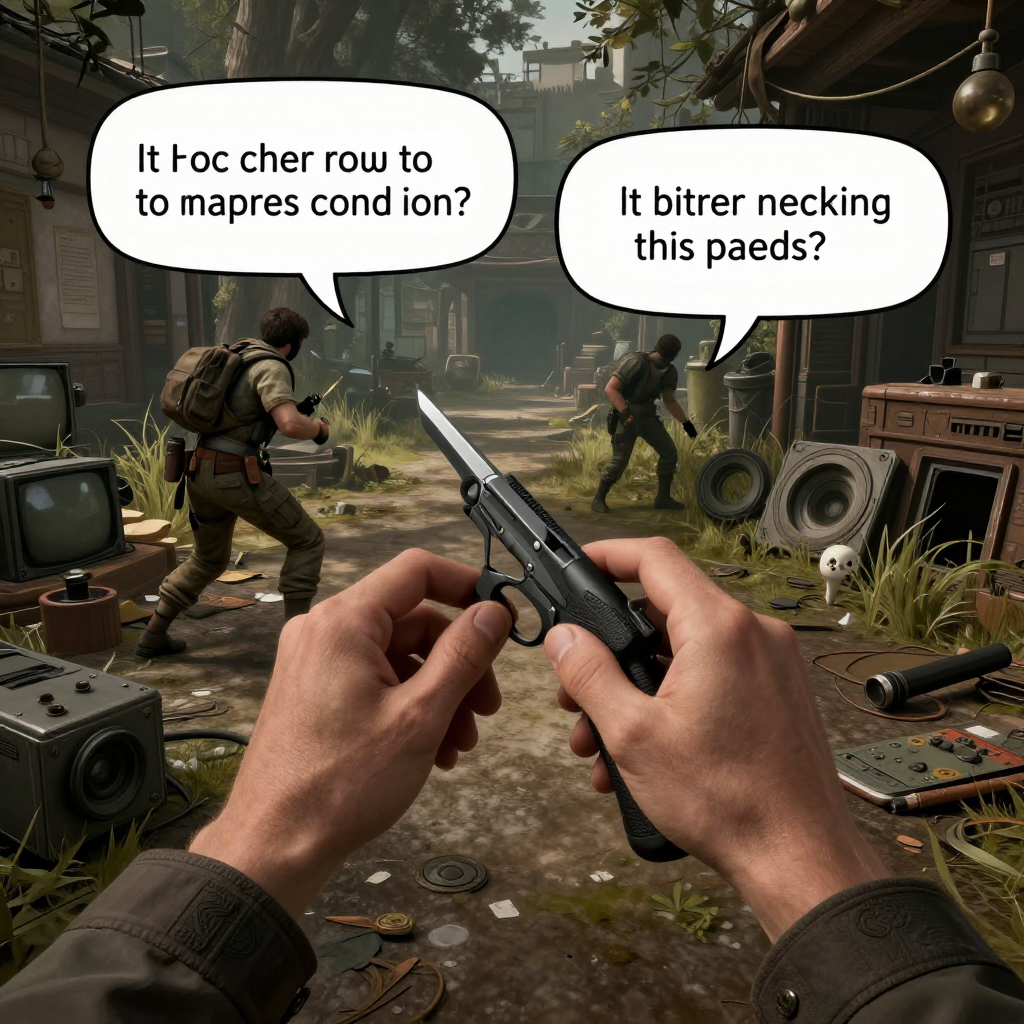
The Role of Pacing, Feedback, and Player Choice
Game pacing, feedback, and player choice support player wellbeing when they create a reliable cycle of challenge, recovery, understanding, and action. Players need enough pressure to stay engaged and enough control to regain composure.
A useful studio framework is the pressure-to-recovery ratio. For every demanding sequence, designers should consider what follows it. A tense escape might lead to a quiet room, optional exploration, a conversation, or a checkpoint. This pause is not wasted time. It gives players space to process the previous event and decide whether to continue.
- Adjustable difficulty: separate reaction speed from puzzle complexity, enemy awareness, and resource scarcity where possible.
- Forgiving failure states: use checkpoints, partial progress, non-punitive retries, and alerts that can cool down.
- Clear feedback: show why an action succeeded or failed through readable sound, visual cues, and interface language.
- Exploration windows: provide areas without immediate threats so players can investigate at their own pace.
- Player-controlled intensity: let players choose optional risks, routes, objectives, or encounter timing.
Accessibility settings also influence stress. Remappable controls, subtitle customization, reduced visual effects, adjustable audio levels, motion options, color choices, and pause functionality can remove discomfort that has nothing to do with the intended challenge.
Studios should avoid confusing difficulty with inconvenience. A vague objective or sudden sensory overload may feel stressful without creating an interesting decision. Good feedback preserves challenge while reducing needless uncertainty.
How Cooperative and Social Systems Can Reduce Stress
Cooperative gameplay can reduce gaming stress when teammates share responsibility, communicate supportively, and pursue common objectives instead of constantly competing for status.
A cooperative non-lethal FPS might ask players to guide civilians, operate separate controls, distract patrols, repair systems, or protect a vulnerable route. These roles encourage coordination without requiring every player to achieve the highest elimination count. Shared success can make mistakes feel like information for the group rather than personal failure.
Communication design matters. Quick commands, visual pings, contextual signals, and clear role indicators help players cooperate without relying on voice chat. This benefits quieter players and reduces the social friction that can make multiplayer stressful.
Non-competitive multiplayer structures offer further alternatives. Teams can compare completion time only after finishing a mission, share optional challenges, or collect resources for a communal goal. A scoreboard is not always necessary to sustain motivation.
Cooperative systems still require care. Forced dependence can become frustrating if one player controls a critical action or if matchmaking creates uneven skill gaps. Designers can reduce that risk with role rotation, generous recovery tools, adjustable communication, and objectives that allow players to contribute in different ways.
Design Considerations for Studios Building Calmer FPS Experiences
Studios building calmer FPS experiences should design for controlled intensity, varied activity, accessible interaction, and evidence-based playtesting. The aim is not to remove tension, but to make tension readable, purposeful, and recoverable.
Balance tension with recovery
Map out each mission as an intensity curve. Mark combat or pursuit peaks, then check whether players receive quieter spaces afterward. If every corridor contains a threat, the game may become exhausting regardless of its non-lethal premise.
Make every solution meaningful
Do not add dialogue, stealth, or rescue mechanics as cosmetic alternatives to shooting. Each route should change timing, information, relationships, or consequences. Players notice when a non-lethal option is technically available but obviously inferior.
Avoid repetitive calm
Low pressure can become boredom if activities lack variation. Rotate between observation, traversal, social reasoning, environmental interaction, and short bursts of danger. Calm gameplay still needs rhythm and surprise.
Test fatigue instead of guessing
Playtesting should examine more than completion rates. Ask participants when they felt overloaded, confused, rushed, engaged, or ready to stop. Compare short sessions with longer sessions, and observe whether errors increase because of difficulty or because attention is declining.
Useful signals include repeated pauses, abandoned optional objectives, confusion about feedback, rapid menu changes, and a sharp drop in experimentation late in a session. These observations do not diagnose a health condition. They help a team identify where the game may be placing unnecessary demands on attention.
Can Non-Lethal FPS Games Stay Engaging?
Non-lethal FPS games can stay engaging when they replace simple elimination goals with meaningful choices, varied challenges, narrative stakes, and responsive systems. Excitement comes from uncertainty and consequence, not from violence alone.
A player may feel tension while deciding whether to trust a character, enter an exposed area, spend a rare stun device, or take a longer route to protect someone. These choices create ownership. The player is shaping the situation rather than merely reacting to targets.
Responsive systems make those decisions matter. Guards can change patrols after a distraction. Characters can remember help or betrayal. A rescued person can unlock information, alter a later route, or reveal that the safest option carries a cost elsewhere. Such consequences create narrative momentum without requiring constant combat.
The strongest non-lethal FPS experiences also respect different definitions of fun. Some players want a quiet investigative atmosphere; others want complex stealth puzzles or cooperative rescue under pressure. Adjustable intensity and multiple approaches allow one game to serve these preferences without pretending that every player experiences stress in the same way.
Frequently Asked Questions
What makes an FPS game non-lethal?
An FPS game is non-lethal when its core objectives can be completed without killing opponents. It may rely on stealth, dialogue, rescue, distraction, environmental solutions, or temporary incapacitation, although some games can include optional lethal choices.
Can non-lethal FPS games still be challenging?
Yes. They can challenge observation, timing, route planning, social reasoning, resource management, and cooperation. The challenge shifts from accuracy and elimination toward decision-making and consequence.
Which design features help reduce gaming fatigue?
Helpful features include adjustable difficulty, clear feedback, recoverable failure, slower transitions between intense events, exploration spaces, accessibility options, varied objectives, and opportunities to pause or reset.
How can studios test whether a game feels stressful?
Studios can combine moderated playtests, post-session interviews, fatigue-focused questionnaires, observation of errors and pauses, and comparisons across session lengths. Teams should identify whether stress comes from intended tension or avoidable confusion and discomfort.
Are non-lethal mechanics suitable for multiplayer FPS games?
Yes. Cooperative stealth, rescue, negotiation, shared puzzles, and team-based environmental objectives can work well in multiplayer. Designers should support role flexibility, clear communication, balanced matchmaking, and alternatives to ranking-driven pressure.
Non-lethal FPS games offer studios a practical way to rethink first-person shooter design around agency, pacing, and player comfort. They are not a universal solution to gaming fatigue or stress, and careful execution remains essential. When systems provide meaningful choices, readable tension, recovery time, and accessible ways to participate, players can experience suspense and engagement without being pushed into relentless combat.