Designing Reward Systems That Prioritize Player Satisfaction Over Aggression
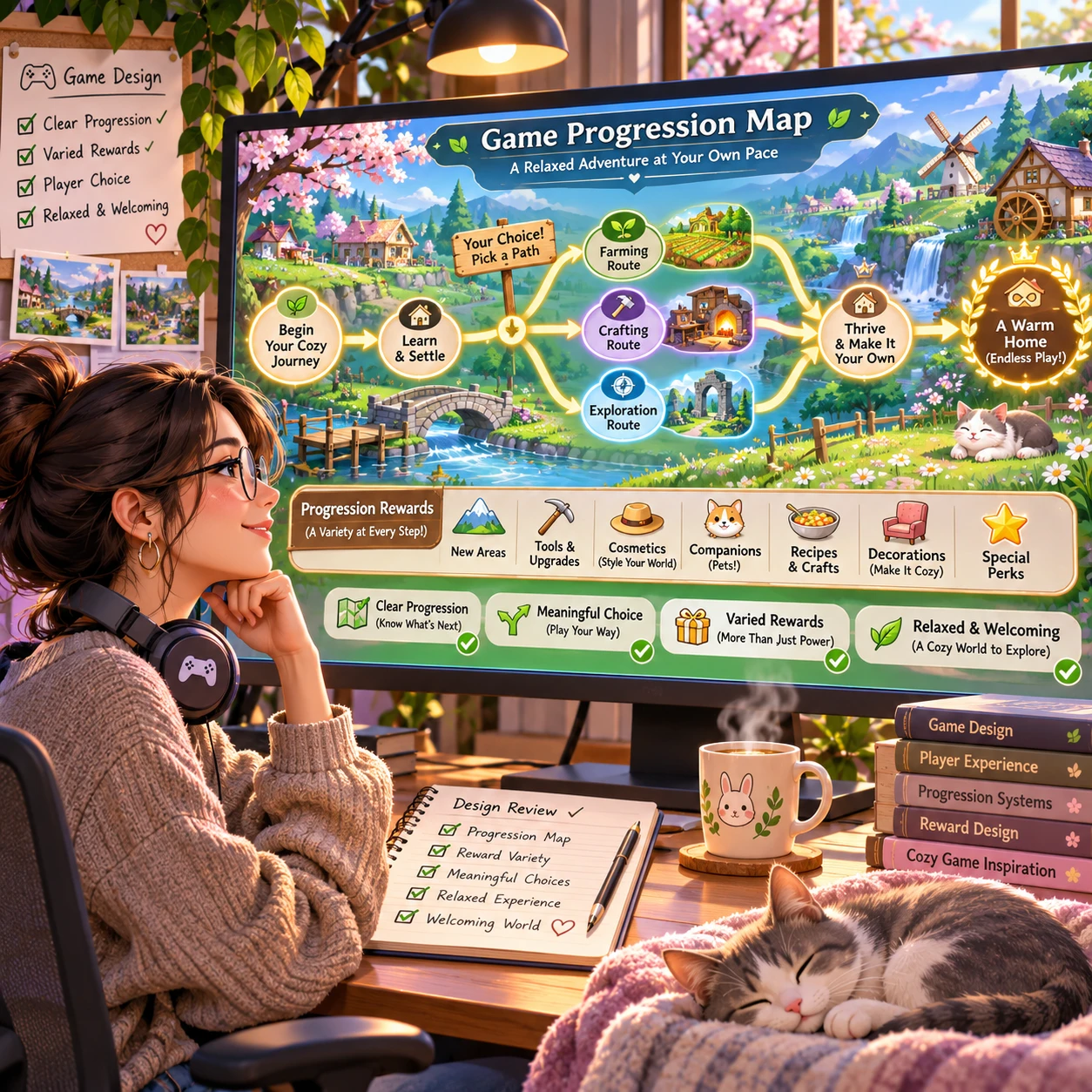
A reward can make a moment feel earned, reveal a new possibility, or give players a way to express themselves. It can also feel like a chore when a game leans too hard on grind, artificial urgency, or opaque odds. For a game development studio, the design challenge is to make rewards support the experience players came for.
That starts with a simple test: does this reward make play more satisfying, or mainly make it harder to stop? The answer should shape progression, reward pacing, monetization, and how a studio measures retention.
Define What a Satisfying Reward Should Do
A satisfying reward strengthens meaningful progress, mastery, discovery, or expression. It gives the player a reason to value what they just did, rather than simply adding another item to a growing inventory.
Before choosing a reward, identify the player action it recognizes. Completing a difficult encounter might unlock a new ability that reflects mastery. Exploring a hidden area could reveal a story detail or a useful shortcut. A cosmetic item may let a player show affiliation or personalize a character. These rewards work because their meaning connects to the experience.
One useful design check is the three-part reward test: connection, consequence, and clarity.
- Connection: Does the reward relate to the challenge, choice, or discovery that earned it?
- Consequence: Does it open a new option, recognize an achievement, or support expression?
- Clarity: Can players understand what they received and why?
A reward does not need to improve combat power to matter. Titles, narrative scenes, new routes, and creative tools can all support player satisfaction. The trade-off is that less tangible rewards may be overlooked if the game does not present their significance clearly. Feedback, animation, contextual dialogue, or a well-organized collection screen can help without turning every item into a spectacle.
Balance Intrinsic and Extrinsic Motivation
Intrinsic motivation comes from enjoying the activity itself; extrinsic motivation comes from an outside reward, such as currency, equipment, or an achievement. A healthy reward system uses tangible rewards to reinforce enjoyable play without making them the only reason to continue.
Consider a player who enjoys solving environmental puzzles. A new tool can reward completion while also creating fresh ways to interact with the world. The reward points back toward play. By contrast, a long sequence of repetitive tasks that exists only to unlock a tool can make the underlying activity feel like a toll.
Use extrinsic rewards with care when a game already depends on curiosity, self-expression, or mastery. If every action is scored and paid out, players may focus on the payout rather than the activity. That does not mean points or loot are inherently harmful; their effect depends on the game, audience, and context.
For each reward, ask what it adds after the first moment of excitement. Does it support a new strategy, deepen a relationship, or make a player’s choices visible? If it only increases a number, it may still suit a progression system, but the studio should make sure that number has a clear purpose. A reward should complement the game’s core loop, not compensate for a loop players do not enjoy.
Pace Rewards Around Player Effort
Reward pacing should reflect the effort, challenge, and time involved, as well as what players expect at that point in the game. A quick action may merit a small, immediate signal; a long-term goal can support a larger milestone reward.
Think in layers rather than searching for one ideal frequency. Immediate feedback can confirm that an action worked. Short-term rewards can mark completion of a mission or a few matches. Longer-term progression can recognize mastery or sustained exploration. These layers help players understand both local success and broader progress.
When tuning pacing, map the player’s effort against the reward’s value and the time until the next meaningful milestone. If a demanding encounter gives the same response as a trivial task, the system may feel flat. If every minor action produces a major reward, larger achievements can lose their distinction.
Test these relationships with representative players instead of relying on a universal formula. A story-focused game, competitive title, and open-ended sandbox create different expectations. In each, watch for stretches where players cannot name what they are working toward, or where a reward arrives so often that it becomes background noise.
Daily rewards and limited-time events deserve particular scrutiny. They can provide a useful reason to return, but strict streaks or expiring high-value items can turn play into an obligation. Consider flexible windows, catch-up options, or rewards that remain available through ordinary play. These approaches may reduce urgency, while building trust and giving players more control over when they engage.
Preserve Choice, Fairness, and Transparency
Fair reward systems make their rules understandable, give players meaningful choices, and avoid using uncertainty or urgency to obscure the cost of participation. Transparency matters for gameplay rewards and for ethical monetization.
Explain how players earn progression, what a purchase includes, and whether an item affects gameplay. If a reward depends on random outcomes, communicate the relevant rules clearly and follow the laws and platform requirements that apply to the game’s markets. Never present a chance-based purchase as a guaranteed path to a specific item when it is not.
Player agency also means offering reasonable ways to pursue goals. A player might choose between a cosmetic reward and a small resource bundle, or select one of several skill upgrades that suit different strategies. Choice is only meaningful if options are viable; a menu of rewards with one obviously superior pick can create the appearance of agency without the substance.
For monetization, separate convenience or expression from pressure to keep up. Paid items should be clearly described, and core progression should not feel deliberately obstructed to make a purchase attractive. A studio may choose to sell optional cosmetics, expansions, or other content, but it should assess whether the offer fits the game’s audience and the expectations set before purchase.
Fairness is partly a perception. A technically consistent rule can still frustrate players if it is hidden, changes without explanation, or appears to favor paying users in a competitive setting. Explain meaningful changes, test how they land, and provide a route to report problems.
Design Progression That Respects Different Play Styles
Respectful progression offers more than one worthwhile route forward, so players can advance through activities that fit their interests and available time. It avoids making a single play pattern the only practical way to progress.
In a role-playing game, for example, players might earn progress through combat, exploration, crafting, or helping characters. In a competitive game, different modes or roles could contribute to account progression, while ranked rewards remain tied to competitive performance. The right options depend on the game’s design; variety should not erase the distinct purpose of each mode.
Build progression around a few practical questions:
- Can a player understand the next milestone and how to reach it?
- Are there viable alternatives for players who dislike one activity?
- Does a short session still provide a useful sense of progress?
- Can returning players see what changed without facing an overwhelming backlog?
A flexible system has costs. Supporting several progression paths takes more design and balancing work, and some rewards may feel less prestigious when they are widely available. Studios can address this by reserving specific recognition for particular achievements while keeping basic advancement accessible through multiple activities.
Test and Improve the Reward Experience
To improve a reward system, combine structured playtesting, direct player feedback, and behavioral signals. No single metric can tell a studio whether a reward feels fair, motivating, and worthwhile.
In playtests, ask players to describe what they expected, what they earned, and whether they understood the connection between the two. Open questions often reveal confusion that a satisfaction score misses. Observe when players pause, abandon a task, ignore a reward, or change activities; these behaviors can suggest friction, though they do not explain its cause on their own.
Behavioral data can help locate a problem. A sudden drop-off at a particular progression gate, repeated retries without improvement, or low use of a newly unlocked feature may justify investigation. Treat these as clues, not verdicts. A player may leave because of a technical issue, a short session limit, or a preference unrelated to rewards.
When testing changes, alter one meaningful element at a time where practical, such as the clarity of a reward preview or the distance between milestones. Compare player reports with completion patterns and return behavior over an appropriate period. Retention is useful context, but it should not be the sole measure of success: a system that increases return visits while increasing frustration has not necessarily improved the experience.
Keep a feedback loop open after launch. Explain major reward changes, invite specific feedback, and check whether the revision solved the reported problem without creating another. The goal is a system players can understand and trust, with progression that makes their time feel well spent.